

You found a cigar that looks promising. The band is beautiful, the wrapper has that deep, oily sheen, and the price feels right. Then you pull up the cigar review—92 points, notes of dark chocolate, cedar, and a hint of white pepper on the finish—and suddenly you’re more confused than before.
Cigar reviews can feel like a foreign language. What does a 92 actually mean? Who decided dark chocolate was in there? And why does the same cigar get a 91 from one reviewer and a 94 from another?
This guide breaks down exactly how cigar ratings and reviews work—what they measure, who’s doing the measuring, and how to use them to find cigars you’ll actually love. We’ll also let you in on a factor most reviews never mention: the role that cigar humidity plays in whether a cigar actually smokes the way a reviewer described.
What Do Cigar Ratings Measure?
Most professional cigar ratings evaluate four core categories:
- Construction: Does the cigar roll evenly? Is the cap solid? Will it hold together through the smoke?
- Draw: How easily does smoke pass through? A tight draw is frustrating; too loose and the cigar burns hot.
- Burn: Does it burn evenly? A good cigar should maintain a consistent, straight burn line with a firm, gray ash.
- Flavor and Complexity: This is where things get subjective. Reviewers assess the range of flavors, how they evolve across the thirds of the cigar, and whether the smoke finishes cleanly.
Understanding cigar shapes and sizes also matters here—vitola affects how a cigar smokes. A lancero and a robusto from the same blend can deliver noticeably different experiences.
What’s a Good Point Rating for a Cigar?
The 100-point scale—borrowed from wine criticism—is the most widely used rating system in premium cigars. Here’s roughly how it maps:
- 95–100: Exceptional. These are benchmark cigars, often listed on annual “top” lists.
- 90–94: Outstanding. A reliable sign of quality. Most enthusiasts target this range.
- 85–89: Good. Solid cigars that deliver a satisfying experience without being exceptional.
- 80–84: Average. Smokable, but may have construction issues or flat flavor profiles.
- Below 80: Not recommended by most publications.
The practical reality: the range between 88 and 95 is where the vast majority of reviewed cigars land. Don’t chase 96s as a beginner—an 88-rated cigar from a brand that fits your palate will beat a 95-rated one that doesn’t.
>Watch: Cigar Tasting Tips from a Pro
Cigar industry veteran, Travis Pappenheim explains how to get the most flavor out of every cigar.
Do You Trust Cigar Reviews?
Expert Reviews
Publications like Cigar Aficionado, Cigar Journal, and halfwheel use structured tasting panels. Cigars are typically smoked blind—the reviewer doesn’t know the brand or price—to reduce bias. Scores are assigned by cigar smokers with trained palates evaluating consistent criteria.
That said, cigar tasting panel practices vary significantly among publications. Some smoke full cigars; others stop at the halfway point. Some reviewers evaluate construction heavily, while others weigh flavor above all else. The methodology shapes the score.
User Reviews
Platforms like Cigar Dojo and community forums aggregate ratings from everyday smokers. The sample sizes are larger, which can smooth out individual preference—but they also include cigars smoked in wildly varying conditions, ages, and storage quality.
The best approach: read expert reviews for a quality baseline, then consult user reviews to get a sense of how a cigar lands with smokers who share your taste profile.
Are Those Flavors Really in a Cigar?
When a reviewer writes “leather, espresso, and toasted almond,” they aren’t making it up—but they’re also not pulling it from a chemical analysis. Tasting notes are a combination of actual aromatic compounds in the tobacco and the reviewer’s personal flavor vocabulary.
Tobacco contains hundreds of naturally occurring compounds that register differently depending on the blend, fermentation process, and aging. One reviewer might identify a note as “dark cocoa”; another might call the same compound “earthy bittersweet.” Neither is wrong.
This is why you’ll sometimes see the same cigar described with surprisingly different tasting notes across publications. Flavor perception is genuinely subjective—shaped by individual palate sensitivity, what the reviewer ate beforehand, and years of experience building a flavor reference library.
Pro tip: when reading tasting notes, focus less on matching the exact descriptors and more on the category of flavors. Sweet, earthy, spicy, creamy, woody—those broad groupings will tell you more about whether you’ll enjoy a cigar than any specific note.
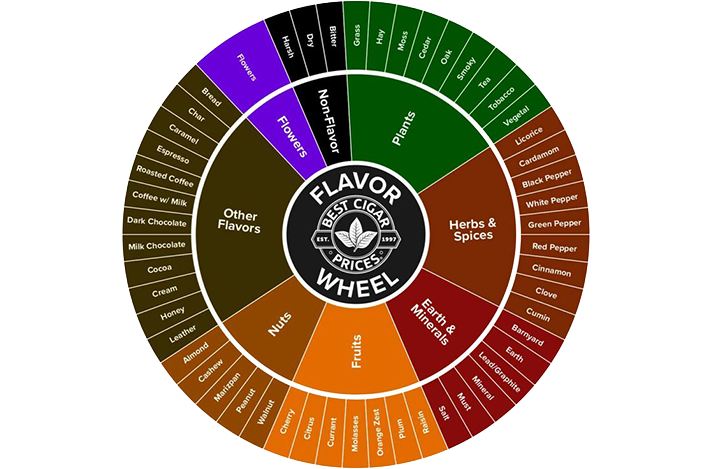
What’s a Cigar Flavor Wheel?
A cigar flavor wheel lists the most mentioned cigar flavor notes in reviews, ratings, etc. The radiating categories create a common language for cigar lovers. One cigar smoker’s palate is different from another’s. We’ve trained our palates to like—and dislike—flavors and aromas. For example, if you grew up around horses, you might more readily pick up on a cigar’s leather and hay notes. Learn how to use a cigar flavor wheel here.
How Can the Same Cigar Have Two Different Ratings?
Here’s something most review roundups won’t tell you: a cigar’s score can change depending on when and how it was stored.
Tobacco is an organic material. It reacts to its environment. A cigar stored at 69% RH in a well-maintained humidor will smoke very differently than the same cigar sitting in a dry shop drawer for three months.
The specific factors that cause rating variance:
- HUMIDITY FLUCTUATIONS: Too dry and the wrapper cracks, draw tightens, and harshness spikes. Too wet and the cigar burns uneven and slow, muting flavors.
- AGE: Young cigars often have sharper, more aggressive profiles. Aging cigars in proper humidity allows tobacco to marry and mellow, sometimes dramatically improving the score a cigar would receive.
- TEMPERATURE SWINGS: Heat accelerates tobacco oils’ behavior. A cigar that’s been heat-stressed loses some of the complexity that earned it a high rating.
Understanding relative humidity (RH) for cigars is foundational here. Most reviewers and experts recommend a range of 65–72% RH for optimal smoking conditions. When you know how a cigar humidor works, you’ll understand why consistent humidity isn’t optional—it’s the baseline for reliable performance.

What Does Humidity Have to Do With Cigar Reviews?
When a professional reviewer assigns a 93 to a cigar, they’re smoking it under controlled, ideal conditions. That score is a promise—but only if your cigar arrives at the same benchmark.
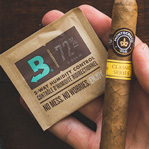
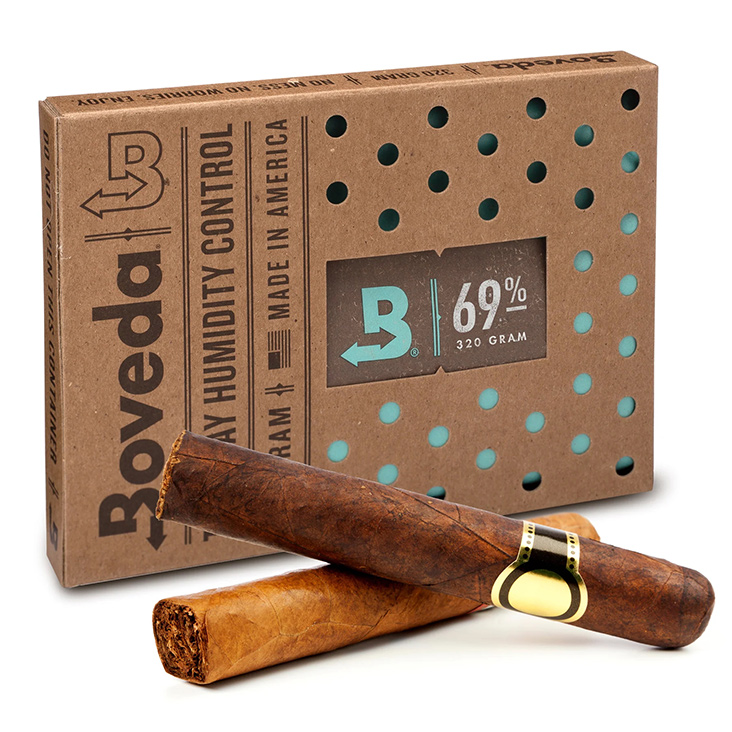
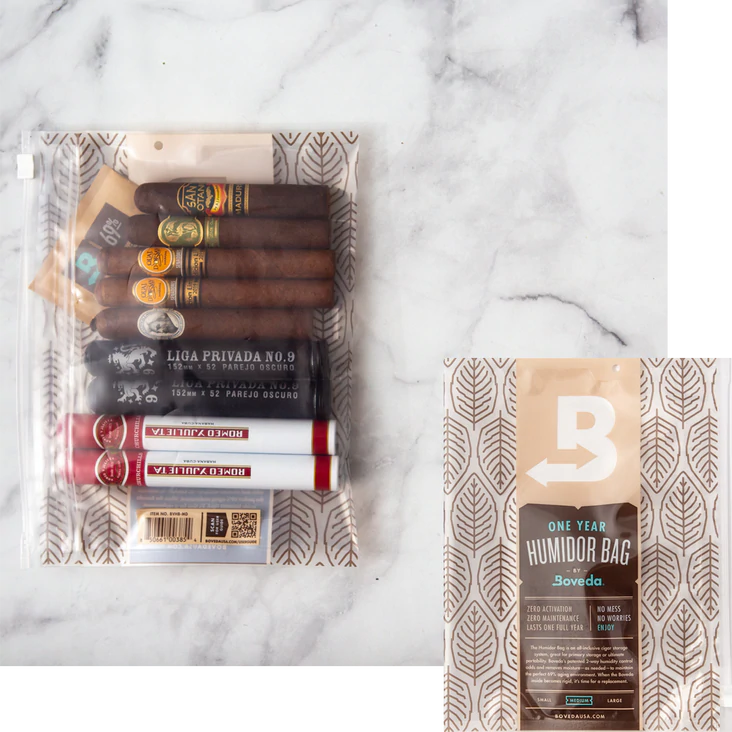
This is why Boveda humidity packs are essential. Boveda uses 2-way humidity control to maintain a precise, stable RH level inside your humidor—absorbing excess moisture when it’s too humid, releasing it when it’s too dry. The cigar you smoke is the cigar the reviewer smoked.
Think of Boveda as the link between the reviewer’s experience and yours. Without consistent humidity, you’re not evaluating the same cigar—you’re evaluating a humidity-compromised version of it.
If you’re new to storing cigars, understanding cigar lifespans will also clarify why storage quality matters as much as what you buy.
How Do You Spot Biased and Sponsored Cigar Reviews?
The influence of advertising on cigar ratings is real, as it is in most enthusiast publications. Here’s how to read critically:
- LOOK FOR BLIND TASTING DISCLOSURES: Reputable publications note whether cigars were evaluated blind or with visible branding.
- CHECK FOR PARTIAL SMOKING DURING REVIEWS: Some reviewers only smoke half a cigar. A cigar’s final third often reveals its character—and its flaws.
- WATCH FOR ADVERTISER CLUSTERING: If a publication consistently scores one manufacturer’s cigars two to four points above independent reviewers, note the pattern.
- CROSS-REFERENCE: A cigar that scores 94 from one outlet and 85 from three others deserves further investigation before purchase.
How Do You Use Cigar Reviews to Find Cigars You’ll Like?
The ultimate goal of any review isn’t to tell you what’s “best.” It helps you find what’s best for you. Here’s how to make reviews actually useful:
- TRACK YOUR OWN NOTES: Rate cigars you enjoy and note the flavor profiles. Over time, you’ll see patterns—maybe you consistently love creamy, medium-bodied smokes with leather notes.
- FOLLOW A REVIEWER WITH A SIMILAR PALATE: If one reviewer consistently recommends cigars you enjoy, their ratings become more valuable to you than any publication average.
- USE A SCORE AS A FLOOR, NOT A CEILING: A 90-rated cigar that matches your flavor preferences will likely please you more than a 95-rated cigar from a style you don’t enjoy.
If you’re still building your palate, our guide to choosing the right cigar is a great starting point—it walks through body, strength, and flavor categories in plain terms.
The Bottom Line
Cigar reviews and ratings are genuinely useful tools—but they’re not the final word. They’re a starting point, a quality filter, and a flavor roadmap. The score a cigar earns under ideal conditions is the score it should deliver to you, as long as you hold up your end of the bargain.
That means proper storage. It means stable humidity. It means giving your cigars the conditions that Boveda humidity packs are designed to maintain.
Read the reviews. Understand the scores. Then make sure the cigar you light matches the cigar that earned them.
All-Star Reviews for Cigar Humidity Control

NO TOBACCO PRODUCTS ARE SOLD OR INCLUDED WITH ANY PURCHASE.